

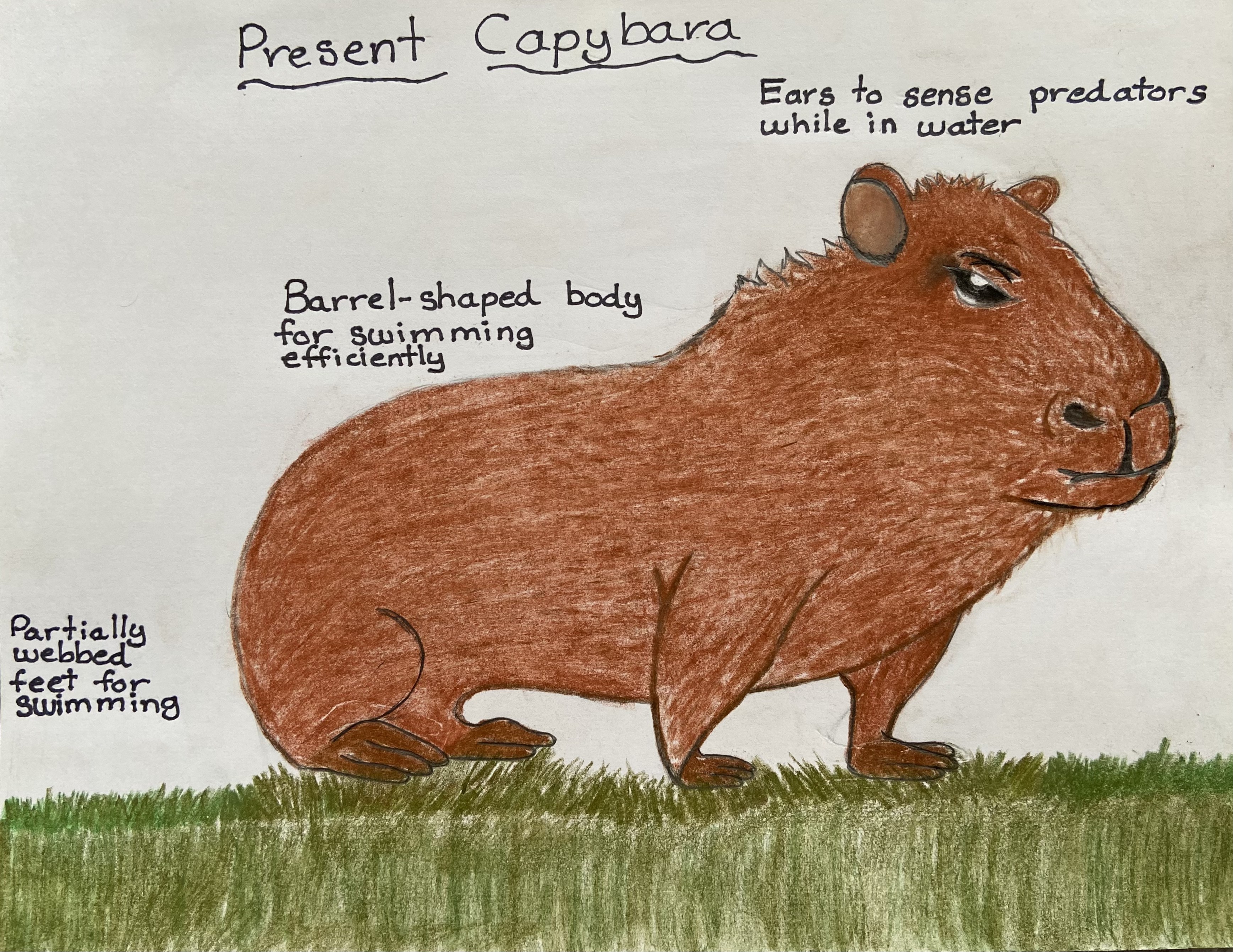
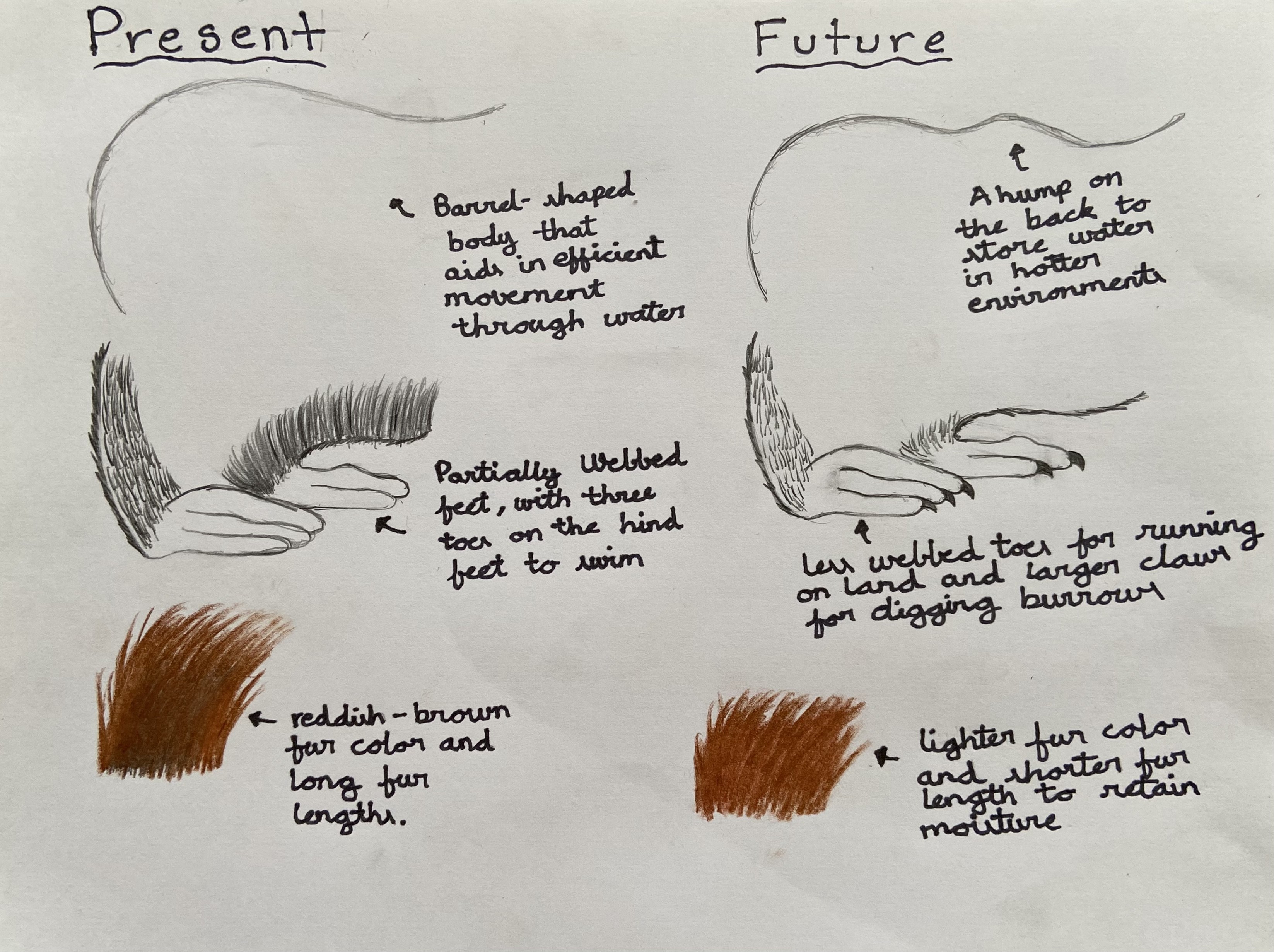
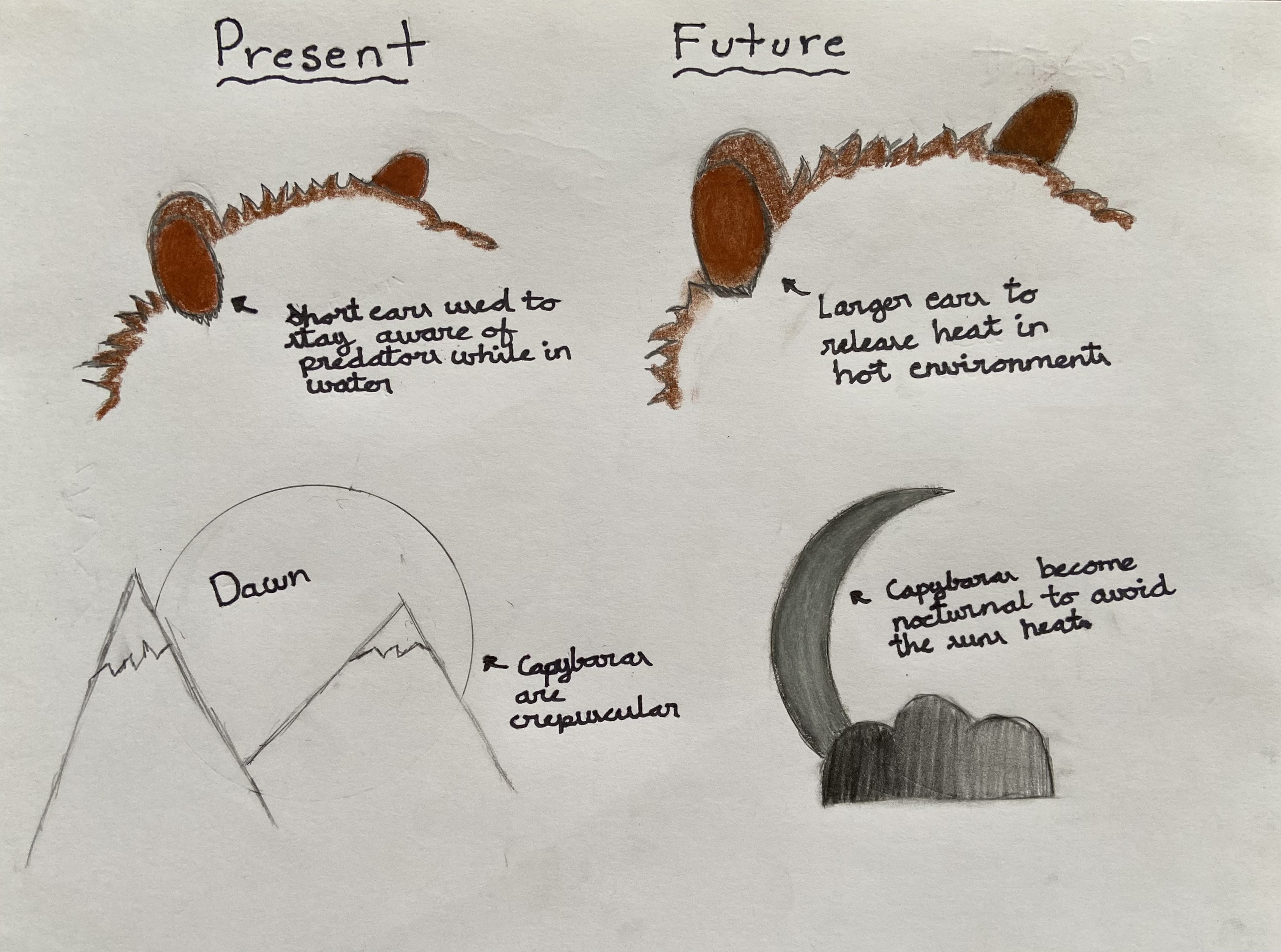


Capybaras, the world's largest rodents, live in the tropical forests of South America. Spending an incredibly large portion of their time in or near water, they have partially webbed feet for efficient swimming, and a long, brittle coat of reddish-brown fur that dries quickly on land. Their sense organs, such as eyes, ears, and nostrils, are specialized and located high on their heads, allowing them to see, hear, and breathe while the rest of their body remains submerged, hiding from predators.
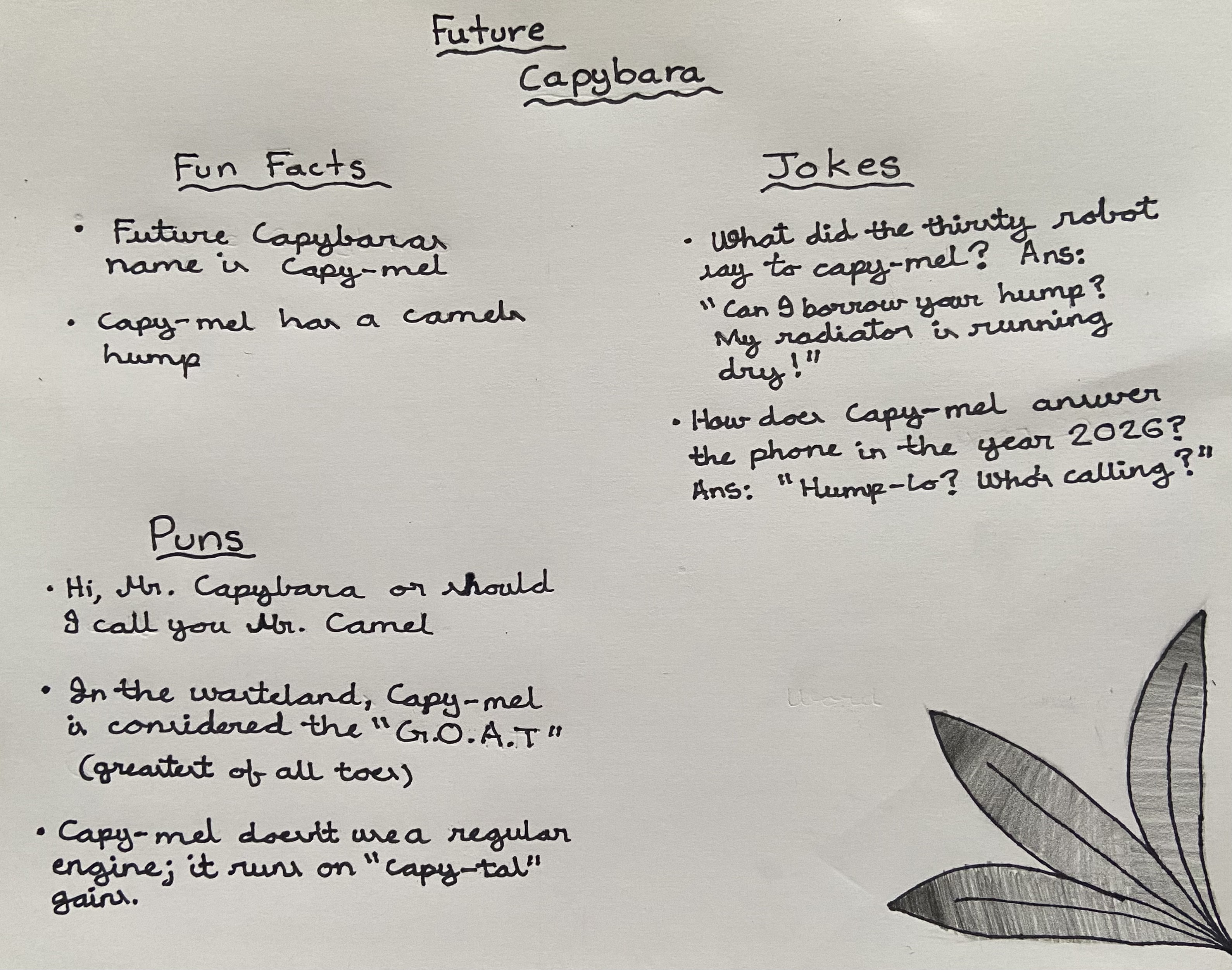
As temperatures rise and climate patterns shift, capybaras may face the drying of their wetland habitats, potentially forcing them to adapt by growing claws to dig burrows, less webbed feet to run on land, adopting a lighter fur color to retain moisture, and becoming nocturnal to avoid the heat. Lastly, when the water is evaporating, the capybara's body will start storing water like a camel and creating a hump.
Contact us
Thank you for your interest in contacting Future Engineers. We look forward to connecting with you!
General Inquiries
support@futureengineers.orgSponsorship Inquiries
sponsor@futureengineers.org