

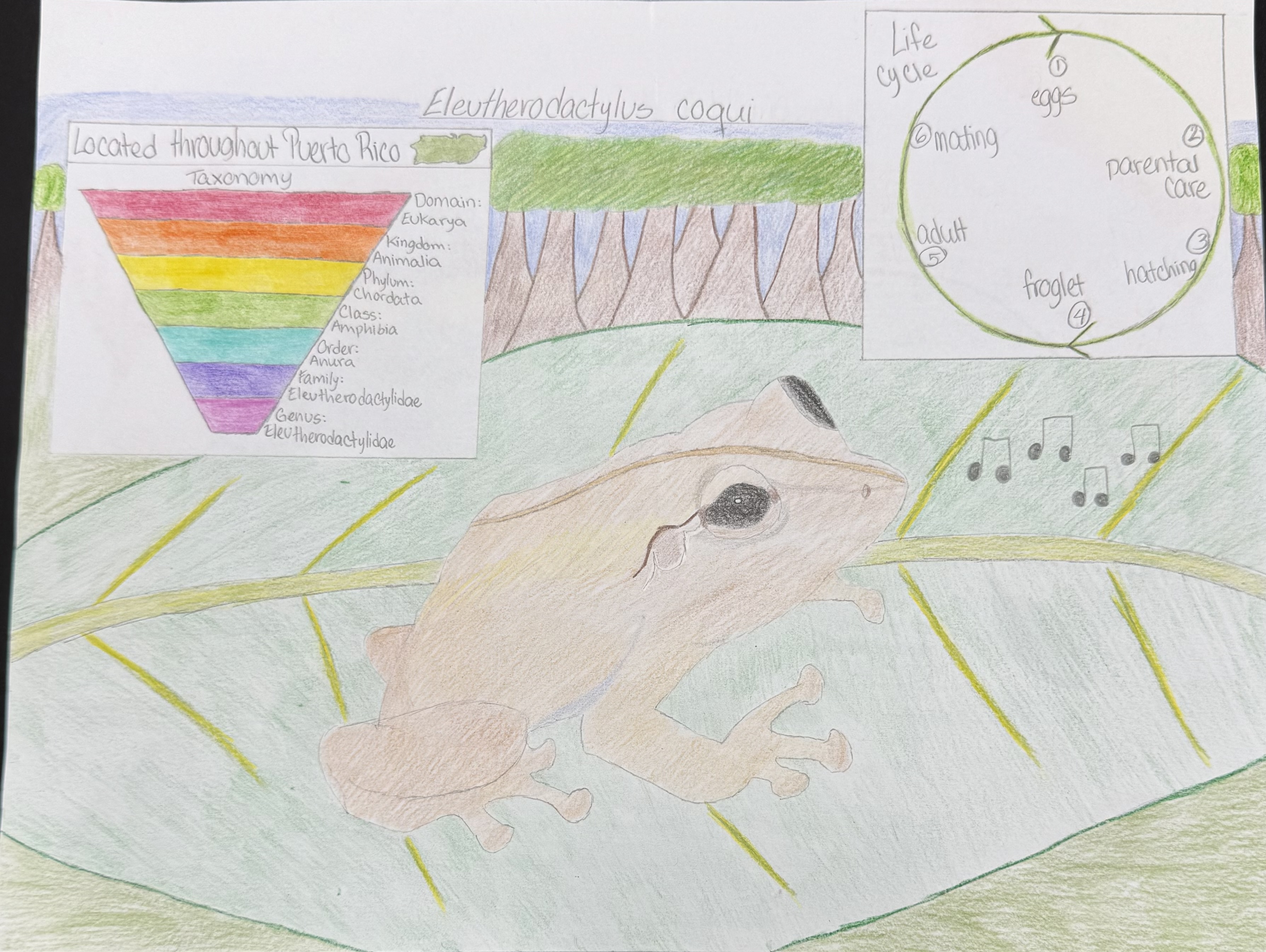
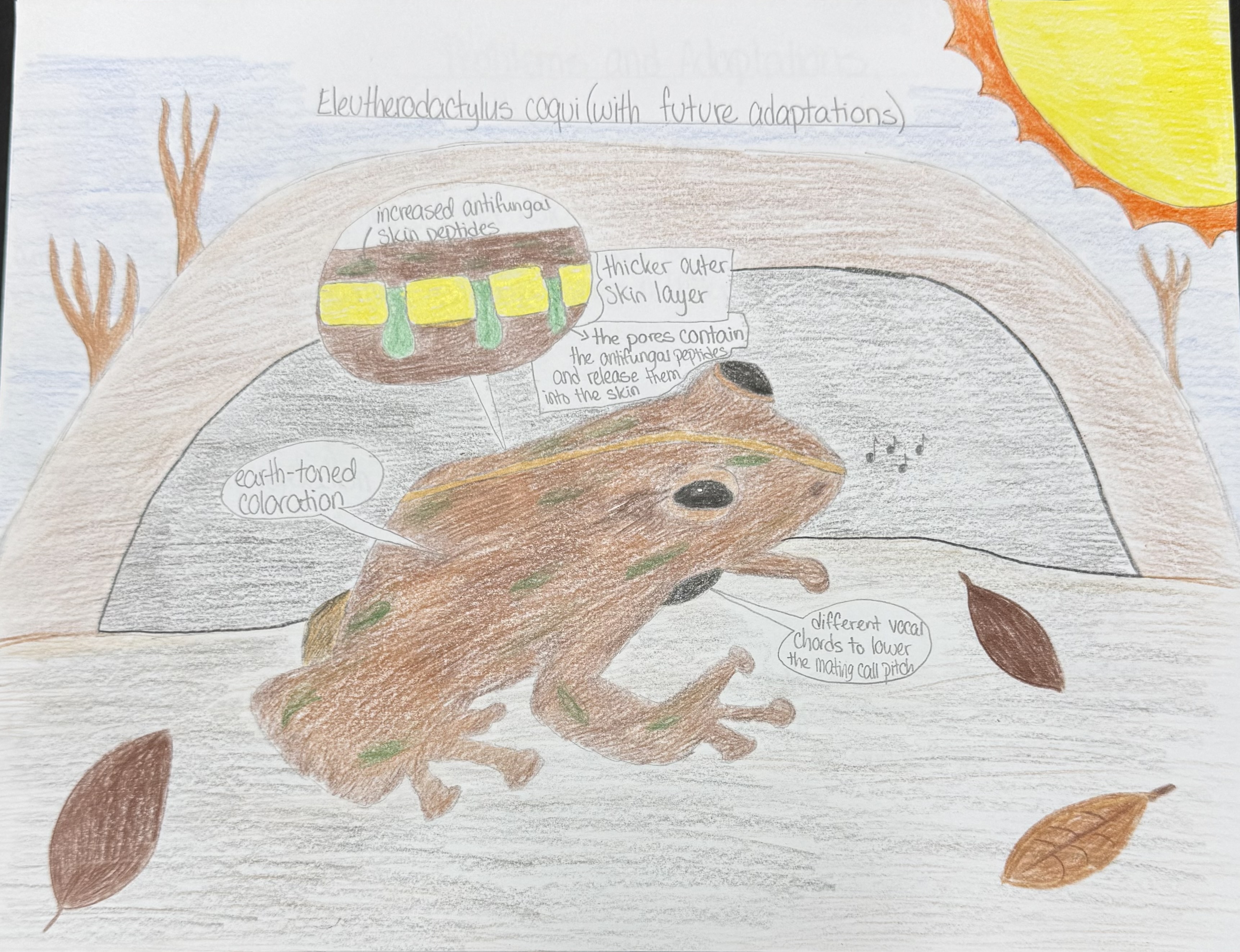
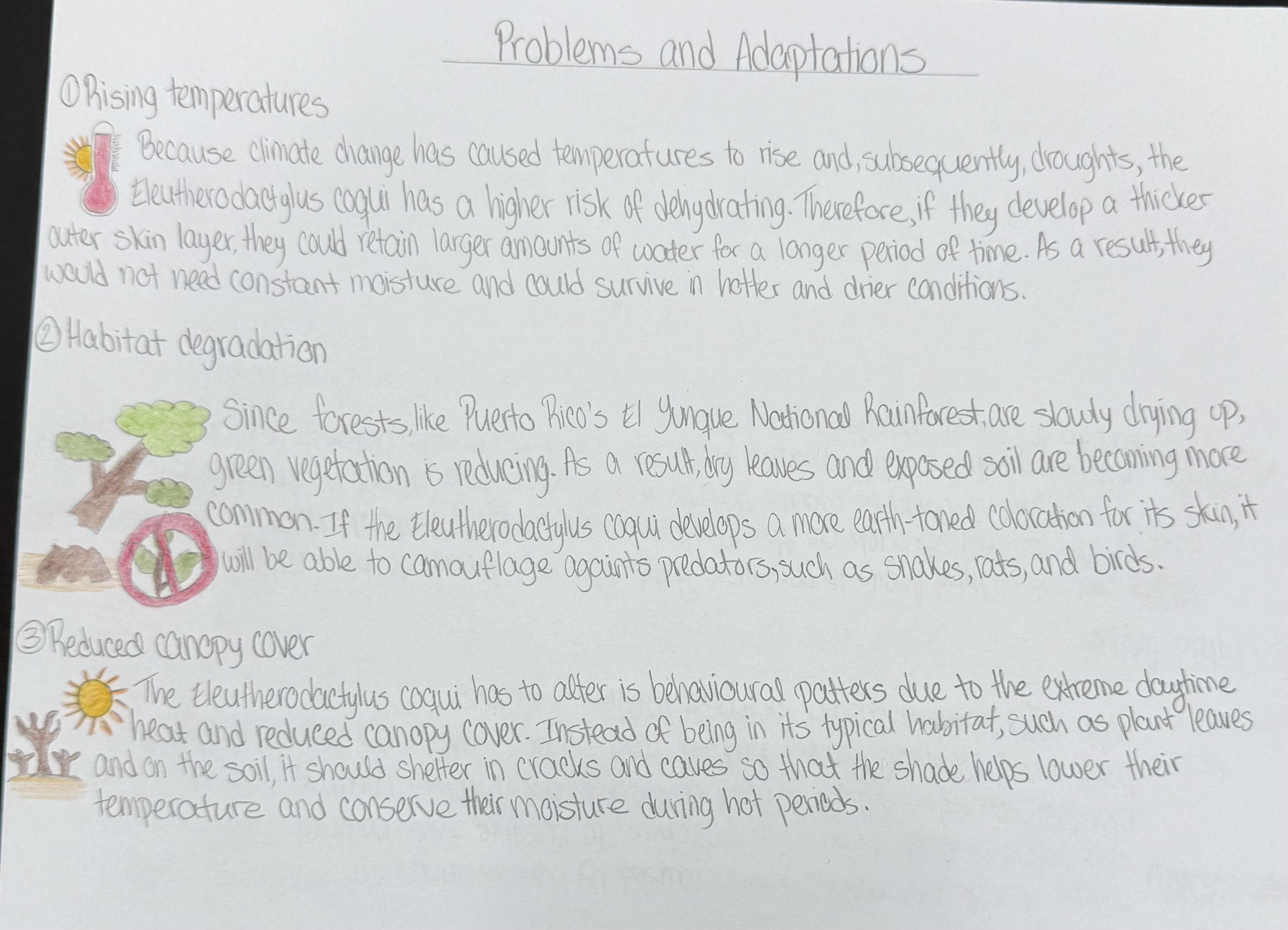
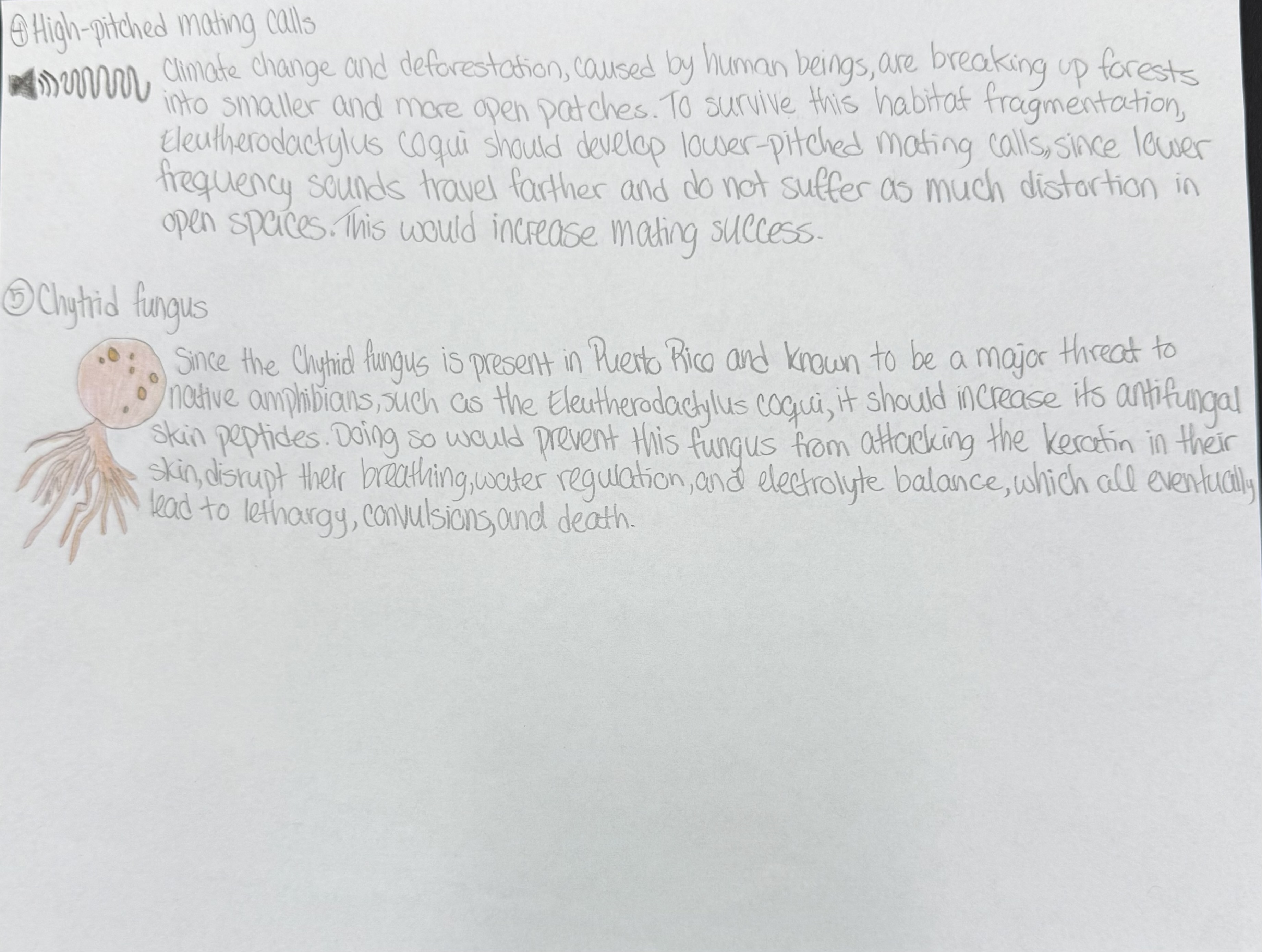
The Eleutherodactylus coqui, also known as the common coqui, is native to Puerto Rico and found primarily in El Yunque National Rainforest. Although it is not currently endangered, climate change is altering its habitat. Rising temperatures and increased droughts raise the risk of dehydration. A thicker outer skin layer would reduce water loss and improve survival. Forest degradation also reduces green vegetation, resulting in increased leaf litter and exposed soil. Developing earth-toned skin coloration would improve camouflage from predators such as snakes, rats, and birds. Habitat fragmentation and reduced canopy cover increase heat exposure. Behavioral shifts toward sheltering in caves and shaded crevices would lower thermal stress. Lower-pitched mating calls would travel farther and distort less in open environments. Another major threat is chytrid fungus, which attacks keratinized skin and disrupts respiration, water regulation, and electrolyte balance, causing lethargy and death. Increased production of antifungal skin peptides would limit infection.
Contact us
Thank you for your interest in contacting Future Engineers. We look forward to connecting with you!
General Inquiries
support@futureengineers.orgSponsorship Inquiries
sponsor@futureengineers.org