

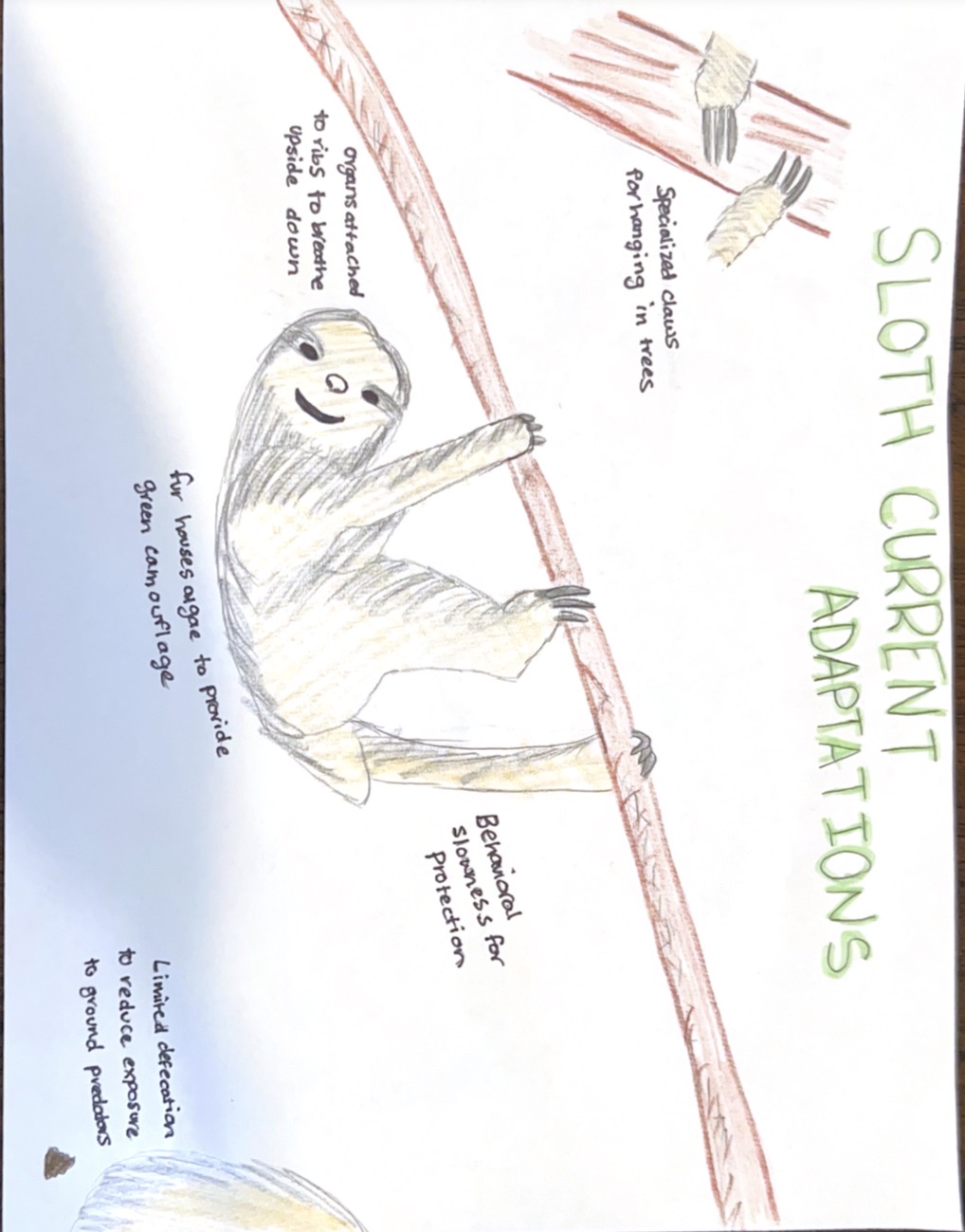
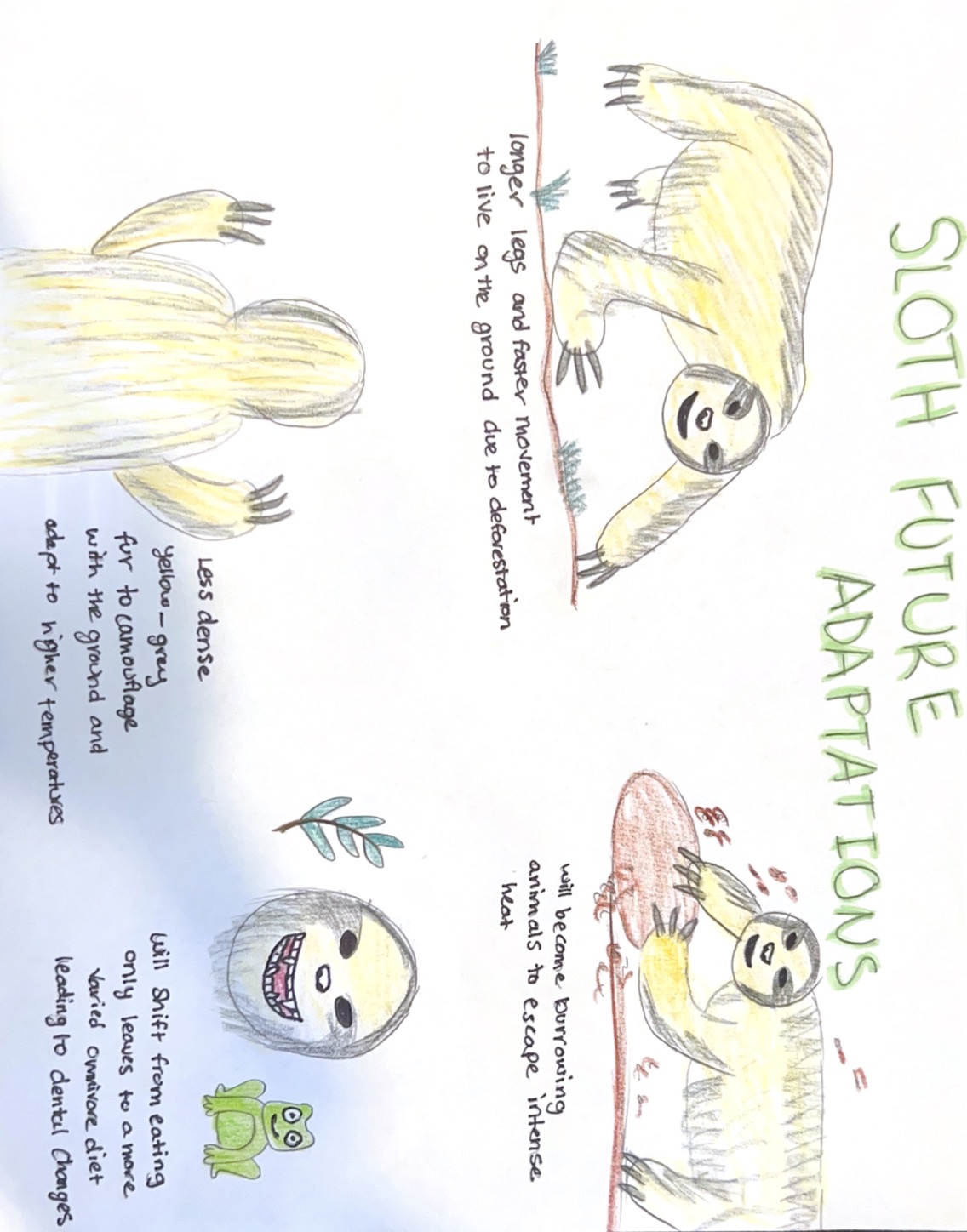
Three-toed sloths inhabit the canopy of tropical rainforests across the world. Sloths have adaptations that help them thrive in their environment. For example, they have specialized claws for hanging in trees and organs that are attached to their ribs to help them breathe while upside down. They exhibit behavioral slowness and limited defecation for protection and reduced exposure to ground predators. Their fur houses algae to provide them with green camouflage to blend in with the leaves. In the future as rainforests turn to savannahs, global warming increases temperature, and deforestation ruins habitats, sloths will have to adapt. They will develop longer legs and faster movement to live on the ground. They will have less dense, yellow-grey fur to camouflage with the ground and adapt to higher temperatures. They will become burrowers to escape intense heat and will shift from eating leaves to a varied omnivore diet causing dental changes.
Contact us
Thank you for your interest in contacting Future Engineers. We look forward to connecting with you!
General Inquiries
support@futureengineers.orgSponsorship Inquiries
sponsor@futureengineers.org