

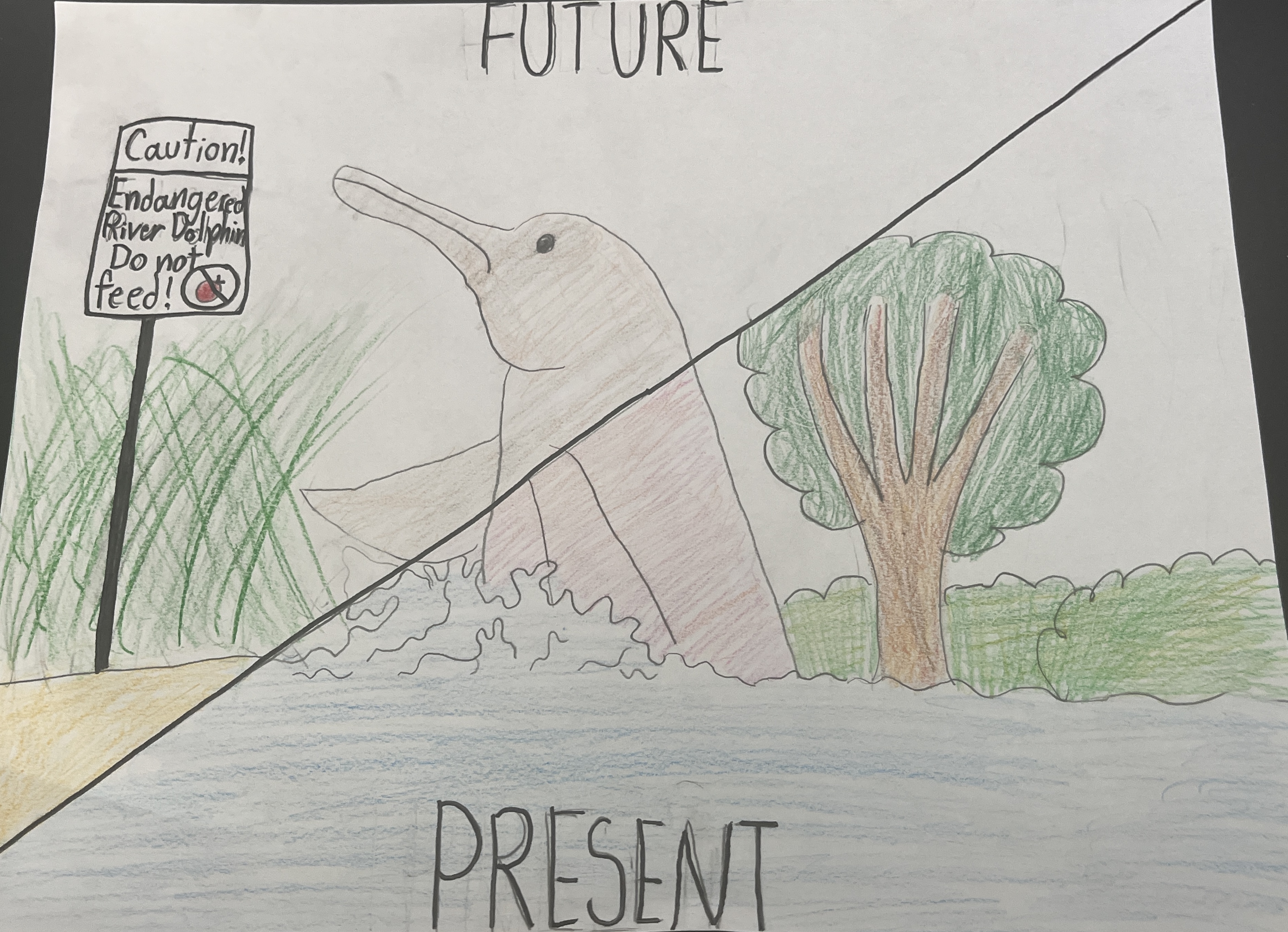
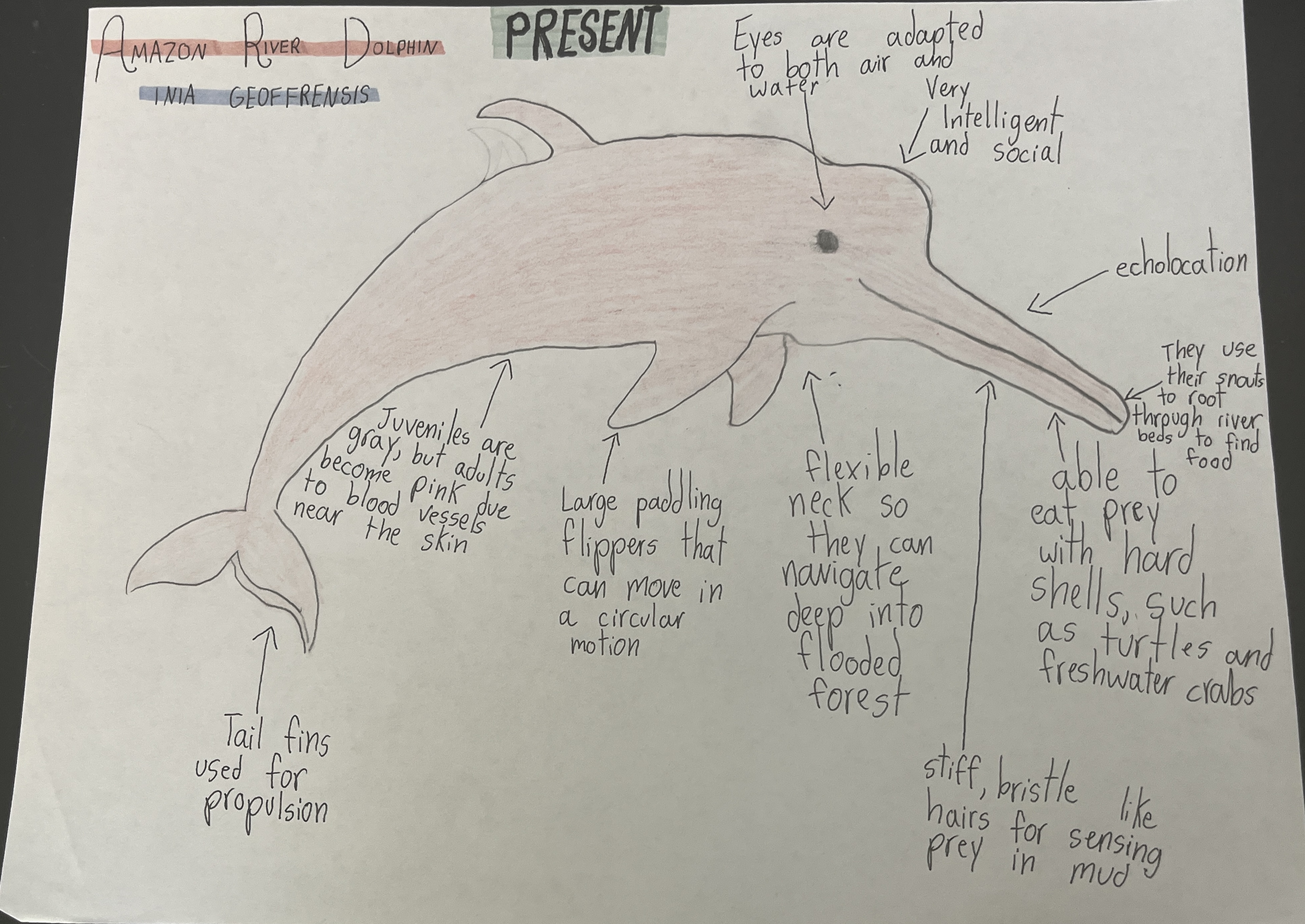
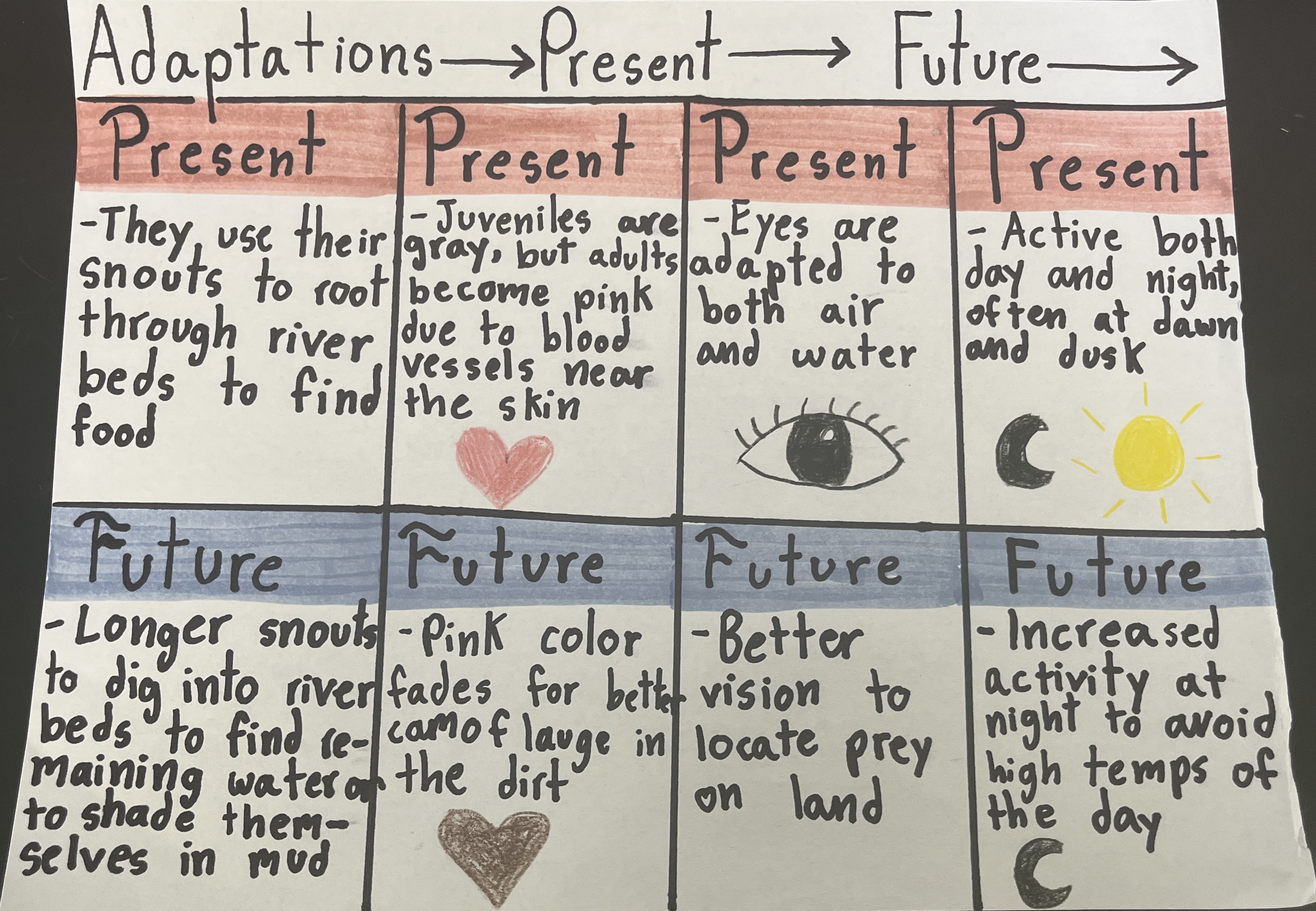
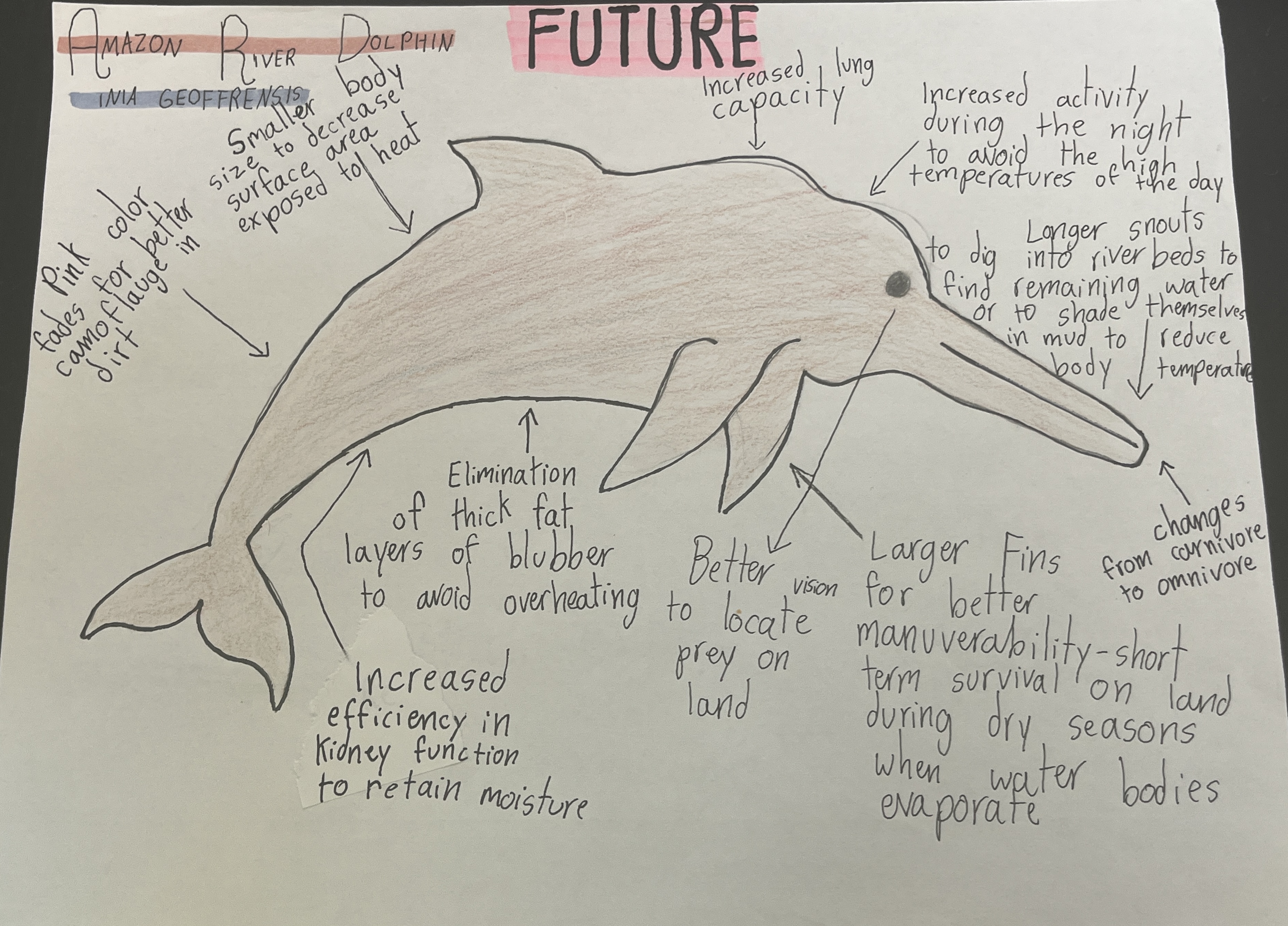
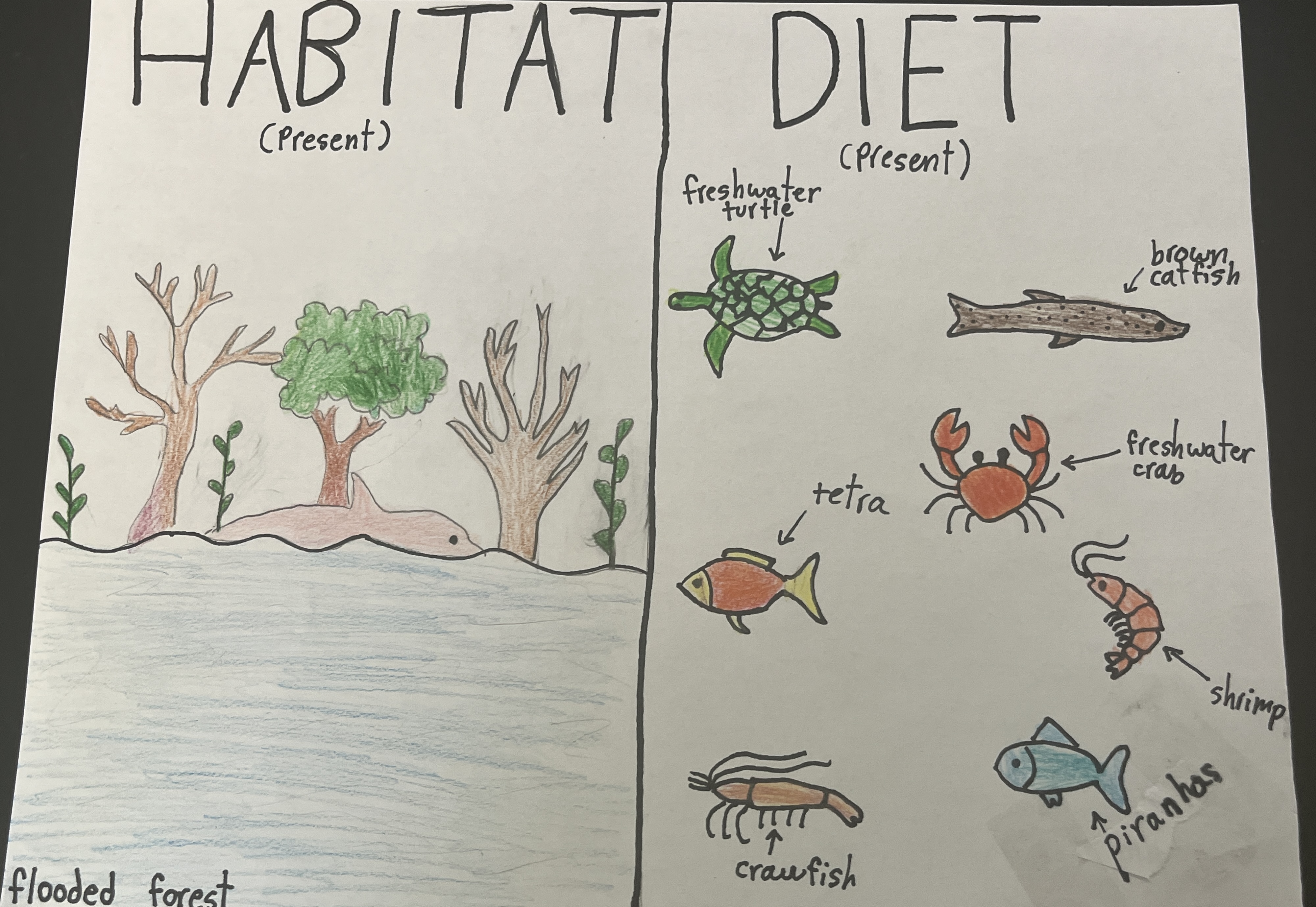
The Amazon River Dolphin (Inia Geoffrensis) may adapt to a savanna-like habitat instead of the rainforest it lives in today. Human pollution from cars and factories could transform rainforests into dry grasslands, forcing these intelligent freshwater mammals to change. Because humans caused the destruction of their home, dolphins may become less social and stop trusting people, avoiding human activity. To survive hotter temperatures, they might evolve smaller bodies and lose thick fat layers to prevent overheating. Their pink color could fade to gray or mottled brown for camouflage and sun protection. Longer, stronger paddle-like flippers could help them move across muddy ground during dry seasons when rivers disappear. Larger lungs would allow longer air breathing as water becomes shallow and seasonal. Their diet might shift from fish to grasses and roots. Improved vision and long snouts could help them find water, dig in mud, and locate food in brighter environments.
Contact us
Thank you for your interest in contacting Future Engineers. We look forward to connecting with you!
General Inquiries
support@futureengineers.orgSponsorship Inquiries
sponsor@futureengineers.org