

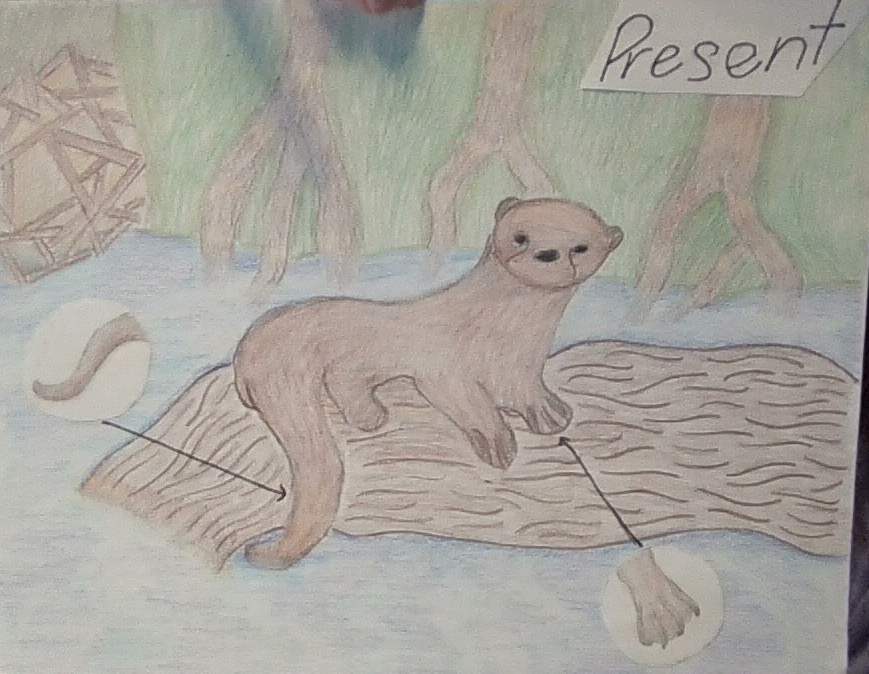

Climate change makes droughts thirty times more likely, and Neotropical Otters in freshwater systems suffer. They have dark-brown fur, long tapered tails, and webbed paws. Neotropical Otters depend on the Amazon, making nests in the water under tree roots. Global warming threatens otters, forcing them to adapt. The first adaptation is bigger ears. Water temperatures rise above Neotropical otters’ comfort, and bigger ears release heat in warmer water. A fin on the otter’s tail allows for fanning to stay cool. The fin will help propulsion as the otters’ hunting changes. The best adaptation is larger webbed feet, increasing size to pin down smaller prey. But the otters’ diet will change. As aquatic prey dies, Neotropical otters can hunt small birds or mammals. Giving otters stronger back legs will support jumping out of the water to catch prey. Camouflage through lightening fur to pale brown will increase hunting and hiding efficiency.
Contact us
Thank you for your interest in contacting Future Engineers. We look forward to connecting with you!
General Inquiries
support@futureengineers.orgSponsorship Inquiries
sponsor@futureengineers.org